Laser seam welding is a cutting-edge technology primarily used in the manufacturing industry for joining various materials. One intriguing question that arises is whether laser seam welding machines can effectively weld ceramics, a material known for its brittleness and high melting point. In this article, we will explore the capabilities of laser welding machines in relation to ceramic materials, their advantages, limitations, and potential applications.
The Basics of Laser Seam Welding
Laser seam welding utilizes a beam of focused light to create a high-temperature spot that melts the material at the joint. The precision of the laser allows for minimal heat-affected zones, resulting in less distortion and improved mechanical properties of the weld. This method is highly valued in industries such as automotive, aerospace, and electronics for its speed and accuracy.
Understanding Ceramics
Ceramics are inorganic, non-metallic materials that are often hard and brittle, making them difficult to weld or join by traditional methods. Their high melting points and thermal conductivity also pose challenges during the welding process. While traditional welding methods, such as arc or MIG welding, are typically ineffective for ceramics, laser welding presents unique potential due to its concentrated nature.
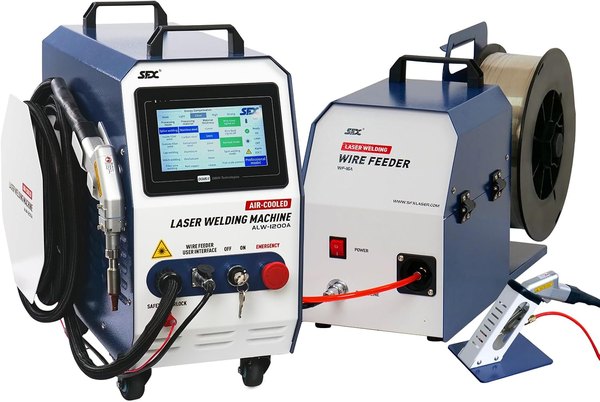
Can Laser Welding Work on Ceramics?
The feasibility of using laser seam welding machines on ceramics depends on several factors, including the type of ceramic, the laser parameters, and the intended application. Some research has indicated that, under specific conditions, laser welding can be viable for certain ceramics, particularly metal and ceramic composites. The key lies in the ability to control the heat input and optimize the laser parameters for the specific ceramic material.
Advantages of Laser Welding for Ceramics
One of the standout advantages of laser welding for ceramics is its precision. The focused energy of the laser minimizes the thermal impact on the surrounding material, helping to preserve the integrity of the ceramic structure. Additionally, laser welding can lead to lower residual stresses compared to traditional methods. It is also highly automated, making it suitable for high-volume production environments.
Challenges in Laser Welding Ceramics
Despite its advantages, there are notable challenges when applying laser seam welding to ceramics. The brittleness of ceramics can lead to cracking during the heating and cooling processes. Furthermore, the interaction of the laser with the ceramic material can create issues like inconsistent melting or weak joints. Therefore, careful consideration and tailored parameters are essential for successful welding outcomes.
Applications and Future Developments
If proven successful on a larger scale, laser seam welding of ceramics could open up new avenues in industries where high-performance materials are essential, such as aerospace and biomedical engineering. The growing interest in hybrid materials that combine ceramics with metals may also enhance the relevance of laser welding techniques. Future advancements in laser technology and deeper understanding of ceramic material properties could mitigate current challenges and expand the feasibility of these processes.
Conclusion
In conclusion, while laser seam welding machines have shown potential for welding certain types of ceramics under the right conditions, further research and development are necessary to fully realize this capability. The unique advantages presented by laser technology may offer innovative solutions for joining ceramics in various high-tech applications, marking an exciting frontier in welding technology.