Laser welding is an advanced technique widely used for joining various metals. One of the metals that can pose challenges in terms of welding is titanium, known for its strength and unique properties. This article explores whether a 2000W metal laser welding machine is capable of effectively welding titanium.
Understanding Metal Laser Welding
Metal laser welding utilizes a focused laser beam to melt and fuse metal parts together. The precision of laser technology allows for high-quality welds with minimal thermal distortion. For metals like titanium, which have different melting points and thermal conductivities compared to more common weld materials, the choice of equipment and process parameters becomes critical.
The Challenges of Welding Titanium
Titanium has a high melting point of about 1668°C (3034°F) and can react with oxygen and nitrogen at elevated temperatures, leading to contamination and reduced weld integrity. This characteristic makes welding titanium particularly challenging. A 2000W laser welding machine, while powerful, may not be sufficient for certain thicknesses of titanium, especially if the parameters are not correctly optimized.
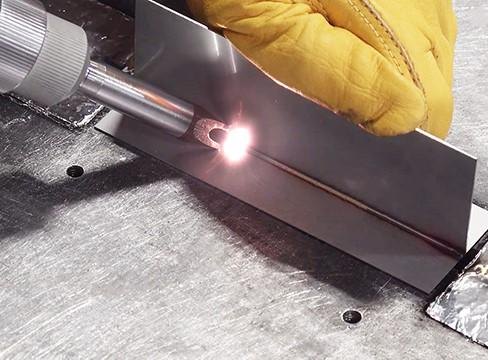
Capability of a 2000W Laser Welding Machine
A 2000W laser welding machine can weld titanium, provided the right techniques and parameters are employed. The key factors include the thickness of the titanium material, the type of laser being used (such as fiber or CO2), and the expertise of the operator in setting up the machine. For thin sheets of titanium, a 2000W system can perform well, but thicker sections may require higher wattage for effective penetration and fusion.
Techniques for Welding Titanium
To achieve successful welds on titanium with a 2000W laser, several techniques can be utilized. These include controlling the speed of the welding process, adjusting the laser focus, and using proper shielding gases, such as argon, to protect the weld area from atmospheric contamination. Preheating the titanium can also enhance the weld quality by reducing the risk of cracking.
Applications of Laser Welded Titanium
Industries such as aerospace, medical, and automotive increasingly utilize titanium due to its favorable strength-to-weight ratio and corrosion resistance. Laser welding provides a means of producing strong, lightweight components with precision, which is particularly valuable in high-performance environments.
Conclusion
In summary, a 2000W metal laser welding machine can indeed weld titanium, given proper techniques and parameters are applied. While challenges exist due to the nature of titanium, advancements in laser welding technology continue to improve its feasibility in various applications. As industries seek to leverage the unique properties of titanium, understanding the capabilities of different welding machines will become increasingly critical.