In recent years, pulsed laser welding has emerged as a popular method for joining dissimilar metals. This article explores the effectiveness of pulsed laser welding machines in welding materials with different properties and the advantages they bring to various applications.
Understanding Pulsed Laser Welding
Pulsed laser welding uses a laser beam to deliver energy in short bursts, enabling precise temperature control. This technique is especially beneficial when dealing with dissimilar metals, where differences in thermal conductivity and melting points can complicate the welding process.
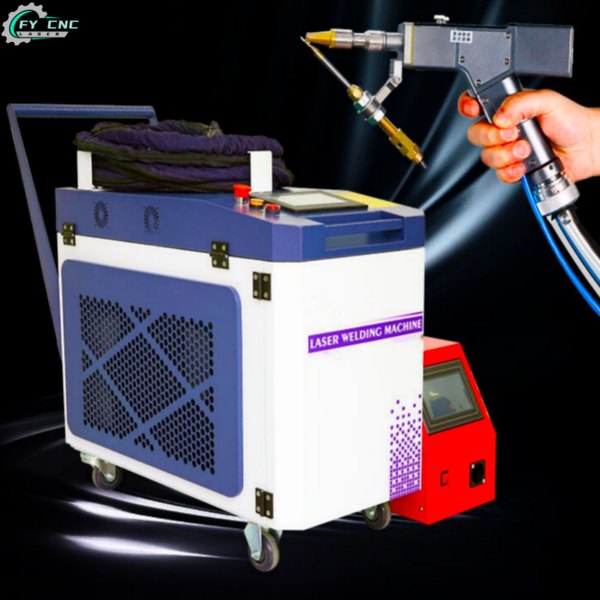
Advantages of Pulsed Laser Welding
One of the primary advantages of pulsed laser welding is its ability to minimize thermal distortion. The short pulse duration allows for localized heating, reducing the heat-affected zone (HAZ). This is crucial when welding dissimilar metals, as these materials often respond differently to heat.
Additionally, this method can produce narrower weld seams and higher welding speeds, making it an efficient choice for industries needing rapid production cycles. Pulsed laser welding can also achieve exceptional weld quality with less post-weld cleanup required, making it ideal for applications where aesthetics and precision are critical.
Material Properties and Compatibility
Welding dissimilar metals requires a thorough understanding of the materials’ properties. For instance, combining materials like aluminum and steel presents challenges due to their different melting points and thermal expansion rates. Pulsed laser welding can effectively bridge these gaps by controlling the energy input to accommodate the specific needs of each metal.
Certain alloy compositions can also enhance the compatibility of dissimilar metals during the welding process. By selecting appropriate filler materials and adjusting the laser parameters, welders can optimize the bonding process and ensure a strong joint.
Applications in Various Industries
Pulsed laser welding has found applications across a range of industries, including automotive, aerospace, and electronics. In the automotive sector, for example, manufacturers often need to combine lightweight metals with stronger counterparts to improve fuel efficiency while maintaining safety standards.
Similarly, in aerospace, the ability to join different metals is essential for creating components that can withstand extreme pressures and temperatures while keeping the overall weight low.
Challenges and Considerations
While pulsed laser welding offers many benefits, it also presents certain challenges. The initial setup costs can be high due to the investment in specialized equipment. Additionally, achieving the optimal parameters for each combination of dissimilar metals may require extensive testing and experience.
Moreover, working with certain materials may necessitate a deep understanding of metallurgy to avoid potential issues like cracking or incomplete fusion, emphasizing the need for skilled operators in this advanced welding technique.
Conclusion
In summary, pulsed laser welding machines are indeed a good option for welding dissimilar metals, primarily due to their precision, efficiency, and ability to minimize thermal distortion. Though challenges exist, the benefits often outweigh the drawbacks, leading to enhanced product quality and performance in various applications. As technology progresses, the capabilities of pulsed laser welding are likely to expand, offering even more innovative solutions for metal joining.