Welding is a critical process in many industries, and choosing the right equipment is essential for achieving high-quality results. This article explores the effectiveness of semi-automatic laser welding machines for welding mild steel, discussing their advantages, efficiency, and suitability for various applications.
Understanding Semi-Automatic Laser Welding
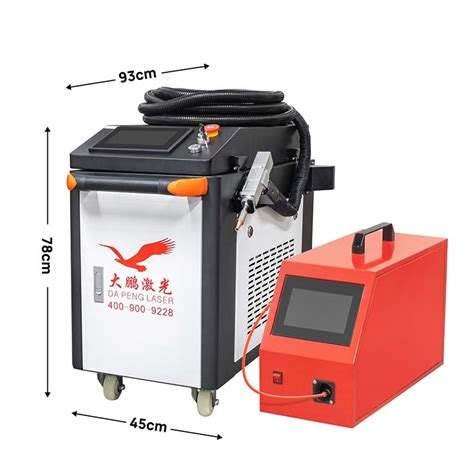
Semi-automatic laser welding machines utilize advanced laser technology to create high-precision welds. They are designed to automate parts of the welding process, making it easier for operators to manage the task while maintaining a high level of control. This equipment typically combines a laser source with a wire feed mechanism, which allows for efficient welding processes tailored to various materials, including mild steel.
Advantages of Using Laser Welding for Mild Steel
One of the primary advantages of using semi-automatic laser welding machines for mild steel is their ability to produce clean and precise welds. The concentrated heat of the laser beam allows for deep penetration with minimal heat-affected zones, resulting in less warping and structural distortion. Additionally, laser welding is less likely to require extensive post-weld treatments, saving time and resources.
Another key benefit is the speed of the welding process. Laser machines can operate at high speeds, significantly reducing production times compared to traditional welding methods. This efficiency is particularly advantageous in high-volume manufacturing environments where time is of the essence.
Efficiency and Productivity
In terms of efficiency, semi-automatic laser welding machines offer high productivity levels. The automated nature of these machines reduces the amount of manual labor required, enabling faster setups and reduced operational costs. For businesses investing in welding technology, this translates into lower labor costs and improved throughput.
Moreover, the consistency of weld quality is a significant factor. Semi-automatic systems can be programmed to deliver uniform results across multiple welds, ensuring that each joint meets the necessary specifications. This consistency is crucial in industries where precision is paramount, such as in automotive or aerospace applications.
Applications of Laser Welding in Mild Steel
Semi-automatic laser welding is suitable for various applications involving mild steel, including automotive parts, structural components, and even artistic metalwork. Its ability to handle different thicknesses and types of mild steel makes it versatile for manufacturers looking to diversify their product offerings.
Additionally, the application of laser welding extends beyond industrial uses. It can be effectively employed in creating intricate designs and custom pieces, highlighting its flexibility in both industrial and artistic domains.
Cost Considerations and Investment
While semi-automatic laser welding machines tend to have a higher initial investment compared to traditional welding equipment, the long-term savings in labor and material costs often justify this expenditure. Businesses should weigh the initial costs against the potential return on investment through increased productivity and lower overheads.
Moreover, as technology advances, the prices for laser welding machines are becoming more competitive. Investing in such technology can position companies favorably within their industries, especially as demand for high-quality welding remains strong.
Conclusion
In summary, semi-automatic laser welding machines are excellent choices for welding mild steel. Their advantages in quality, efficiency, and versatility make them suitable for various applications across industries. While initial costs may be higher, the potential for long-term savings and improved productivity makes these machines a worthy investment for businesses looking to enhance their welding capabilities. Adopting this advanced technology can ensure that manufacturers stay competitive in an ever-evolving market.